Benefits for Heart Health, Energy, Antioxidant Protection & Fertility
Discover the active form of CoQ10 and why it matters for healthy ageing, everyday vitality and reproductive wellness.
In a Hurry? Key Takeaways
- Active and highly absorbable: Ubiquinol is the reduced, antioxidant-active form of CoQ10, which the body can use without first converting ubiquinone into ubiquinol.
- Heart health: CoQ10 supports cellular energy production in the heart, one of the body’s most energy-demanding organs.
- Cellular energy: CoQ10 helps mitochondria produce ATP, the energy used by our cells.
- Antioxidant protection: Ubiquinol helps protect cells against oxidative stress.
- Fertility research: Studies suggest potential benefits for certain sperm parameters and reproductive outcomes, but improved live-birth rates are not established.
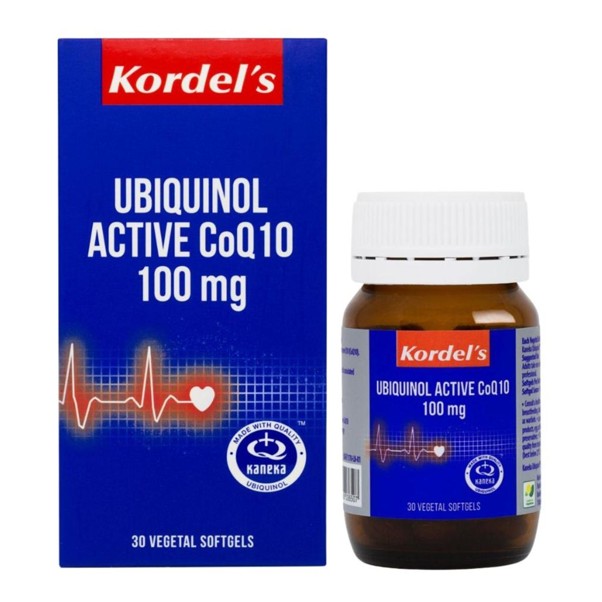
- Kordel’s Kaneka Ubiquinol™ Active CoQ10 100 mg: Provides 100 mg per vegetal softgel, taken once daily after a meal.
What Is Ubiquinol CoQ10?
From keeping your heart beating to powering your daily activities, your body relies on energy produced within trillions of cells.
Coenzyme Q10 (CoQ10) is a naturally occurring substance found throughout the body, particularly in the heart, brain, liver and muscles.
It plays two important roles: supporting cellular energy production and providing antioxidant protection.
Our body’s natural CoQ10 production tends to decline with age, making it an important nutrient of interest for healthy ageing.
Ubiquinol vs Ubiquinone: What’s the Difference?
CoQ10 exists in two forms:
- Ubiquinone: The oxidised form, which the body can convert into ubiquinol.
- Ubiquinol: The reduced, antioxidant-active form, readily used in the body’s natural CoQ10 cycle.
Ubiquinol is often called the active form because it is already in its reduced antioxidant form.
1. How Does Ubiquinol Support Heart Health?
Your heart works continuously, requiring a constant supply of cellular energy.
CoQ10 plays an essential role in mitochondrial energy production, helping heart cells carry out their normal functions. For everyday wellness, the relevant message is that CoQ10 supports normal cellular energy production in heart tissue.
2. How Does Ubiquinol Support Cellular Energy?
Think of mitochondria as tiny power stations inside your cells.
They produce ATP (adenosine triphosphate), the energy-carrying molecule needed for normal bodily functions.
CoQ10 helps transfer electrons during ATP production, making it an essential part of this process.
Whether you are working, walking, exercising or enjoying an active lifestyle, your cells depend on this energy-production system.
3. Why Is Ubiquinol a Powerful Antioxidant?
Every day, our bodies produce free radicals through normal metabolism and exposure to environmental factors.
Excessive free radicals can contribute to oxidative stress, potentially affecting cells and their membranes. Ubiquinol helps neutralise free radicals and supports the body’s antioxidant defence system.
4. What Is the Connection Between CoQ10 and Fertility?
Planning for a family? Healthy reproductive cells require both cellular energy and protection against oxidative stress.
CoQ10 has attracted scientific interest because these processes are important for sperm and egg function.
Male fertility — sperm health
CoQ10 supports mitochondrial energy production, which is important for sperm movement. Its antioxidant activity may help protect sperm cells against oxidative stress; a factor associated with impaired sperm function.
Female fertility — egg health
Developing eggs require substantial cellular energy. CoQ10 supports mitochondrial function, which is important for normal egg development. Research has explored whether supplementation may improve outcomes in women undergoing assisted reproductive treatment.
5. How Much Ubiquinol Should You Take?
Kordel’s Kaneka Ubiquinol™ Active CoQ10 provides 100 mg per vegetal softgel.
Suggested use: Adults take one softgel daily after a meal, or as directed by a healthcare professional.
As CoQ10 is fat-soluble, taking it with food may help absorption.
Kaneka Ubiquinol Active CoQ10 100 mg: World’s First Patented Ubiquinol Ingredient.
Why Choose Kordel’s Kaneka Ubiquinol™ Active CoQ10 100 mg?
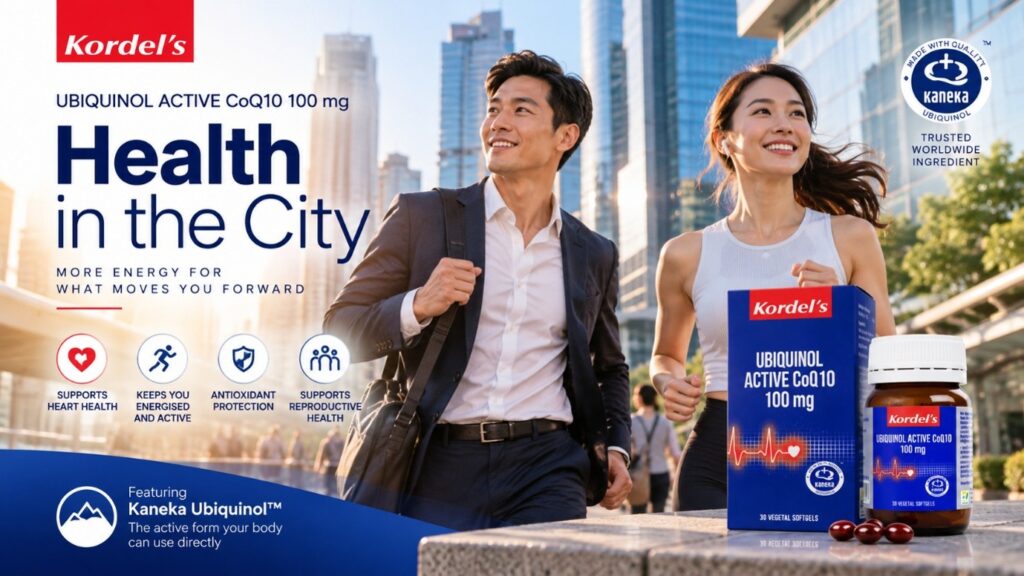
100 mg Kaneka Ubiquinol™ – World’s First Patented Ubiquinol Ingredient.
The reduced, antioxidant-active form of CoQ10.
Highly absorbable formulation
Supports normal cellular energy production and antioxidant protection.
Convenient daily intake
One vegetal softgel daily after a meal. https://www.nuvanta.com.sg/products/health-in-the-city/kordels-ubiquinol-active-coq10-100-mg-30s/
Frequently Asked Questions
Is ubiquinol better than ordinary CoQ10? Ubiquinol is highly absorbable and antioxidant-active. Some studies show better absorption than particular ubiquinone formulations, but results depend on the product.
Can ubiquinol support fertility? CoQ10 is involved in processes relevant to reproductive health, and some clinical studies show promising findings. It is not proven to guarantee conception or successful pregnancy.
When should I take ubiquinol? Take Kordel’s Ubiquinol CoQ10 after a meal. Consult a healthcare professional if you are pregnant, breastfeeding, undergoing fertility treatment or taking medicines such as warfarin.
The Takeaway
Your heart, muscles and reproductive cells all rely on normal cellular energy production and antioxidant protection.
Kordel’s Kaneka Ubiquinol™ Active CoQ10 100 mg offers a convenient way to supplement the reduced, antioxidant-active form of CoQ10 as part of a balanced, healthy lifestyle.
Kordel’s — Health The Easy Way Since 1949.